The molecular portrait
Every image in our collection is a unique visualization derived from the compound's molecular signature. No two are alike, because no two molecules are alike.
The algorithm
Each compound arrives with a dataset: amino acid sequence, molecular weight, structural classification. Our generative system translates these properties into visual parameters. Particle count derives from sequence length. Stroke density follows molecular weight. Circular motifs emerge from cyclic structures. The algorithm does not illustrate the molecule. It interprets its data as form.
The output is deterministic. The same compound will always produce the same image. Run the algorithm a thousand times with the same molecular data, and a thousand identical portraits emerge. Reproducibility is not a feature. It is a requirement.
The translation
Eight visual vocabularies
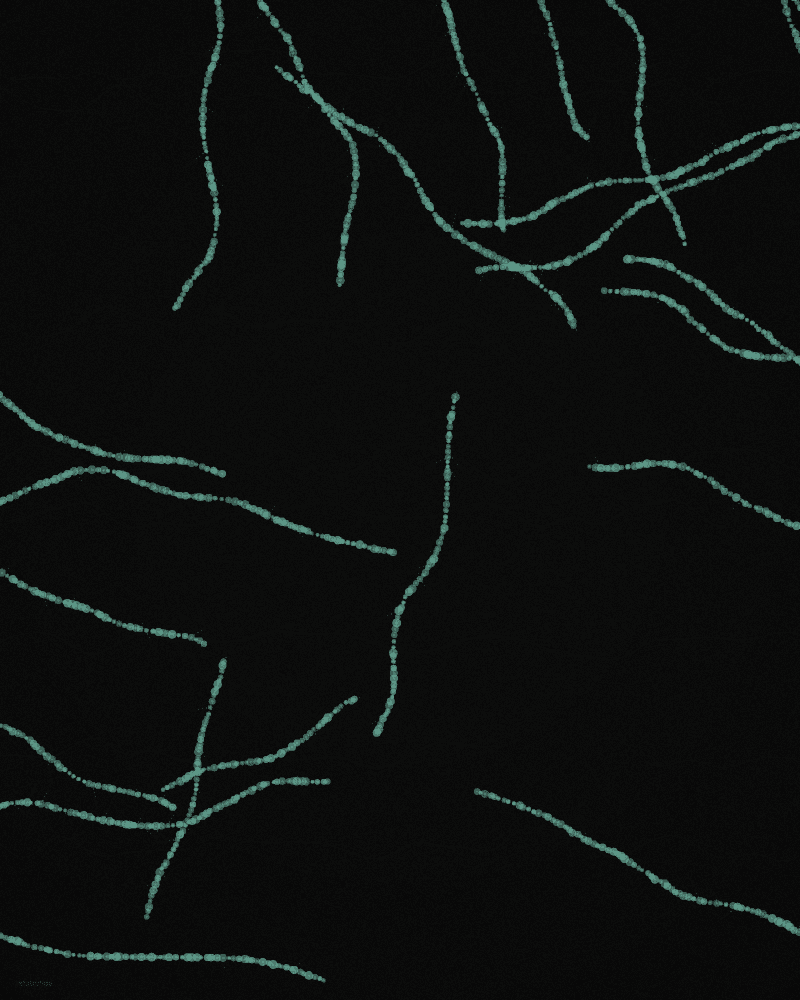
Particle-cascade streams
Streams of dots flowing downward in muted sage and teal, trailing and branching as they descend. The cascading signal of appetite, glucose and fuel-use pathways — a current of metabolic information moving through the frame.
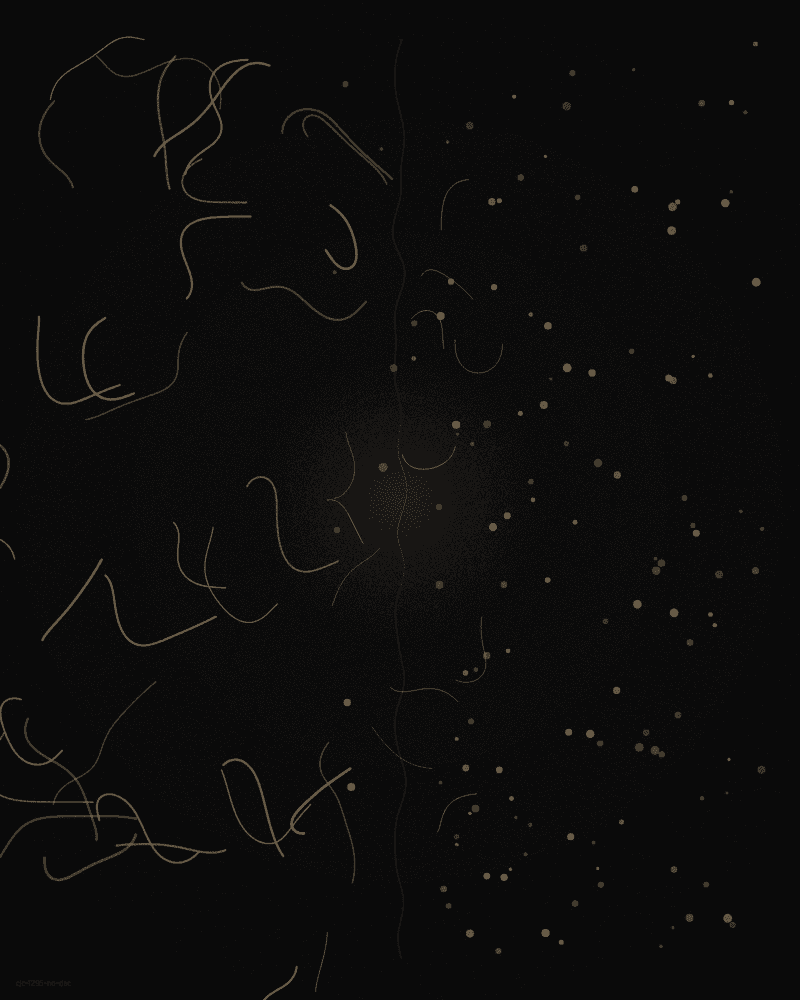
Dual convergence
Flow-field curves meeting a dotted particle field at a central glowing axis, rendered in warm amber. Two geometries converging — the pituitary prompt and the body's own pulsed release, drawn toward a single point of focus.
Collagen-fibre bundles
Flowing fibre bundles in champagne-gold, bound at intervals by cross-link nodes. The architecture of tissue rebuilding itself — strands gathering, knitting, and holding at the points where repair takes hold.
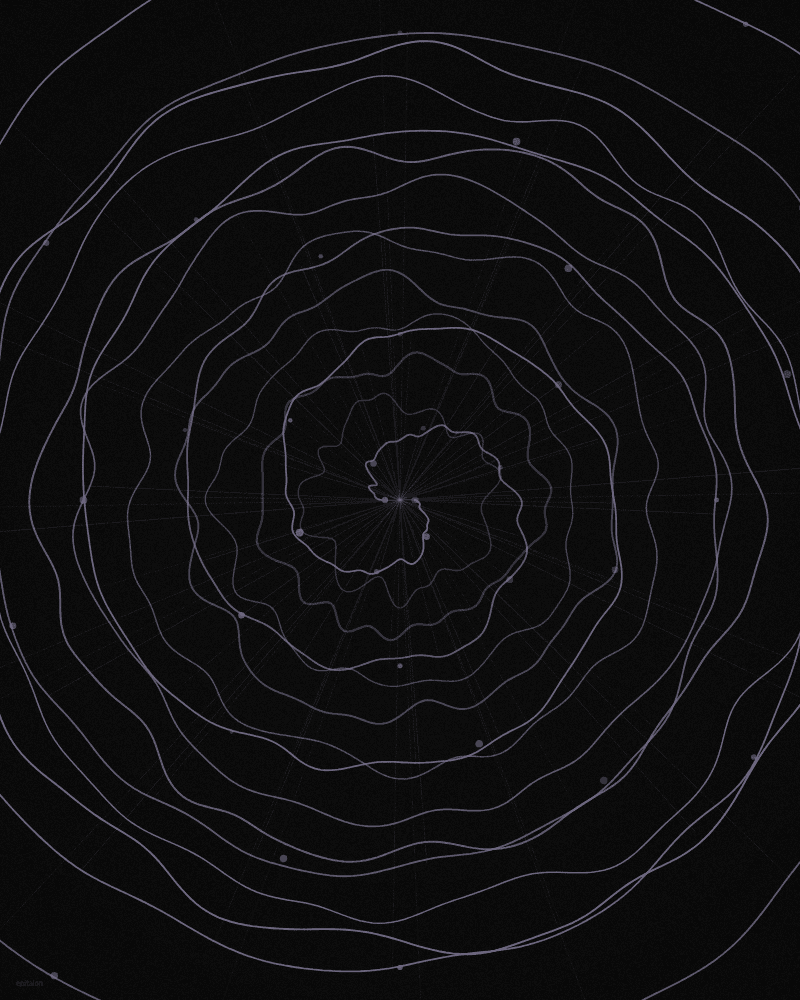
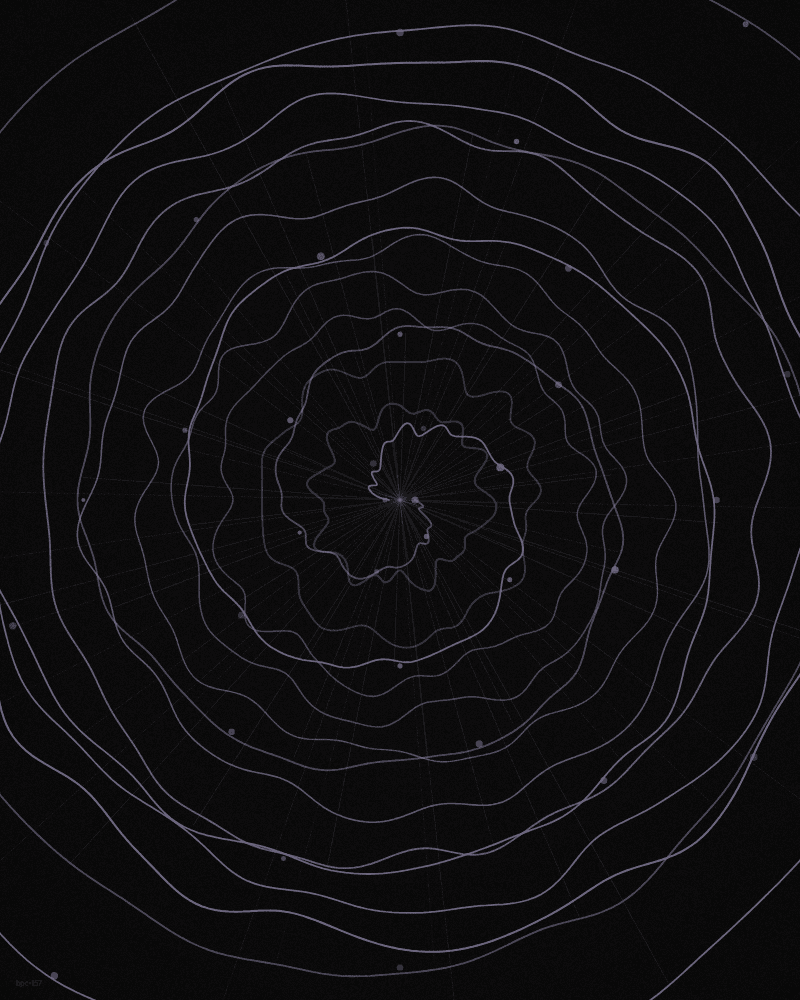
Helix within concentric rings
Concentric rings encircling a centred double-helix spiral in soft lavender. The calm, ring-stabilised vocabulary of cellular maintenance — telomere biology and tissue renewal held in quiet orbit around the genetic core.
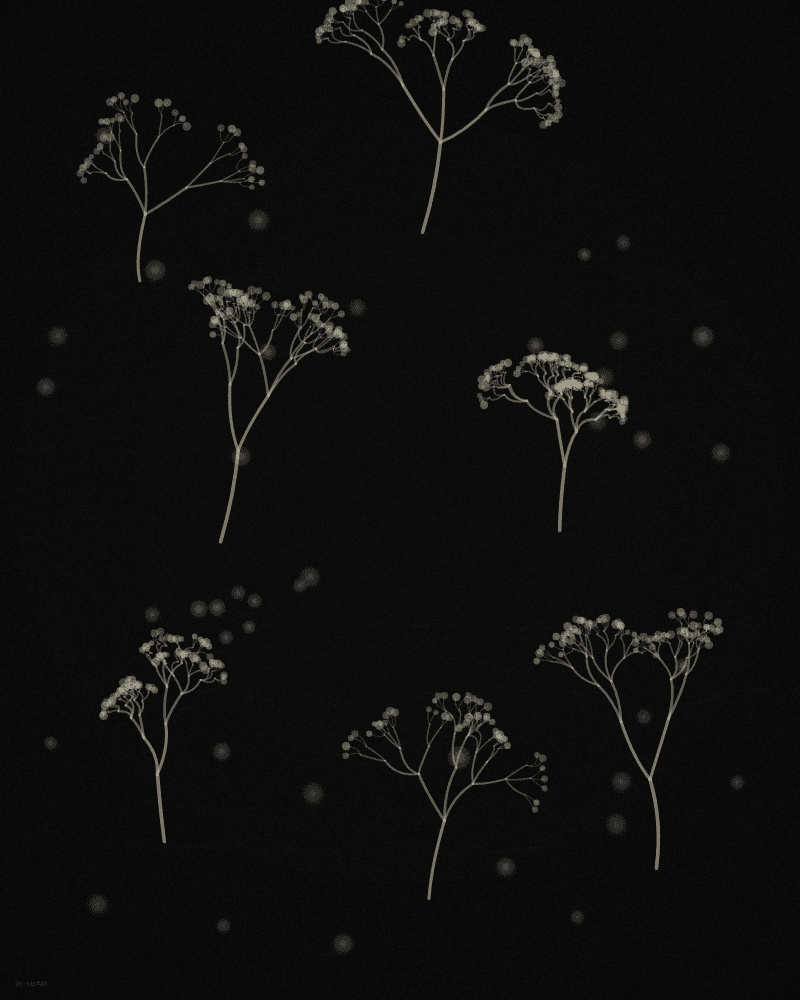
Branching dendrites
Branching dendrite trees in warm silver, terminating in faint synaptic glow points. Neural geometry — the arborisation of the nervous system rendered as form, working with its own tone rather than against it.
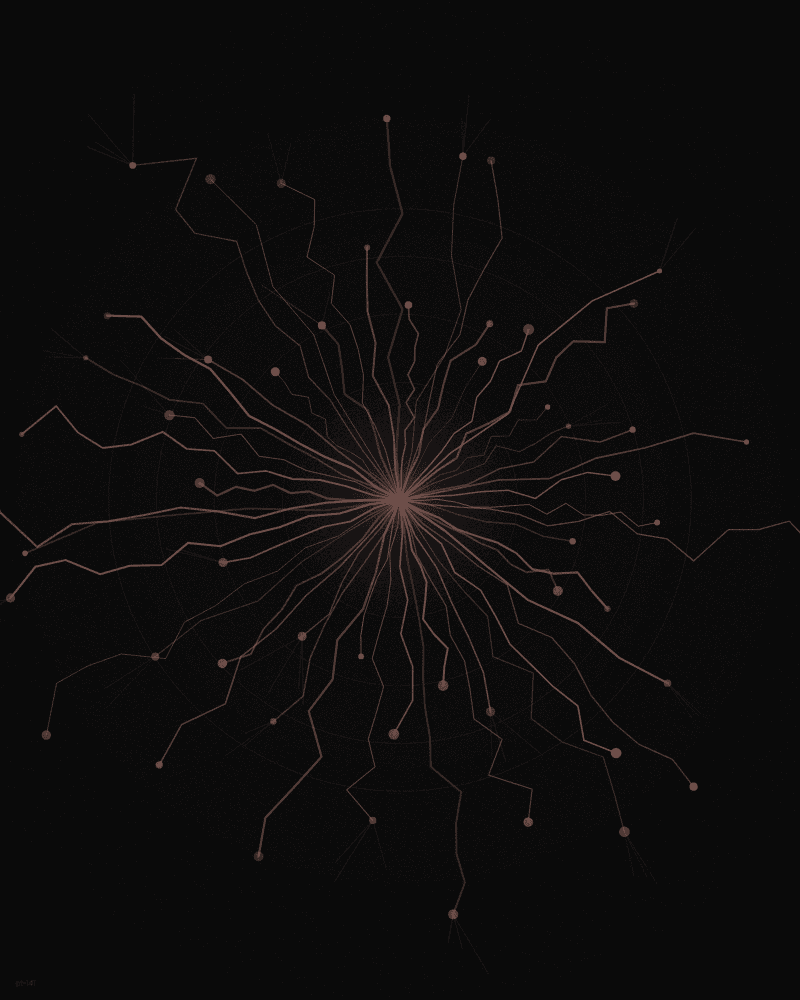
Central radial burst
A central radial burst of rays in warm rose emanating from a glowing core, ringed by concentric ripples. Desire and drive as a signal propagating outward — central, not peripheral, in its origin.
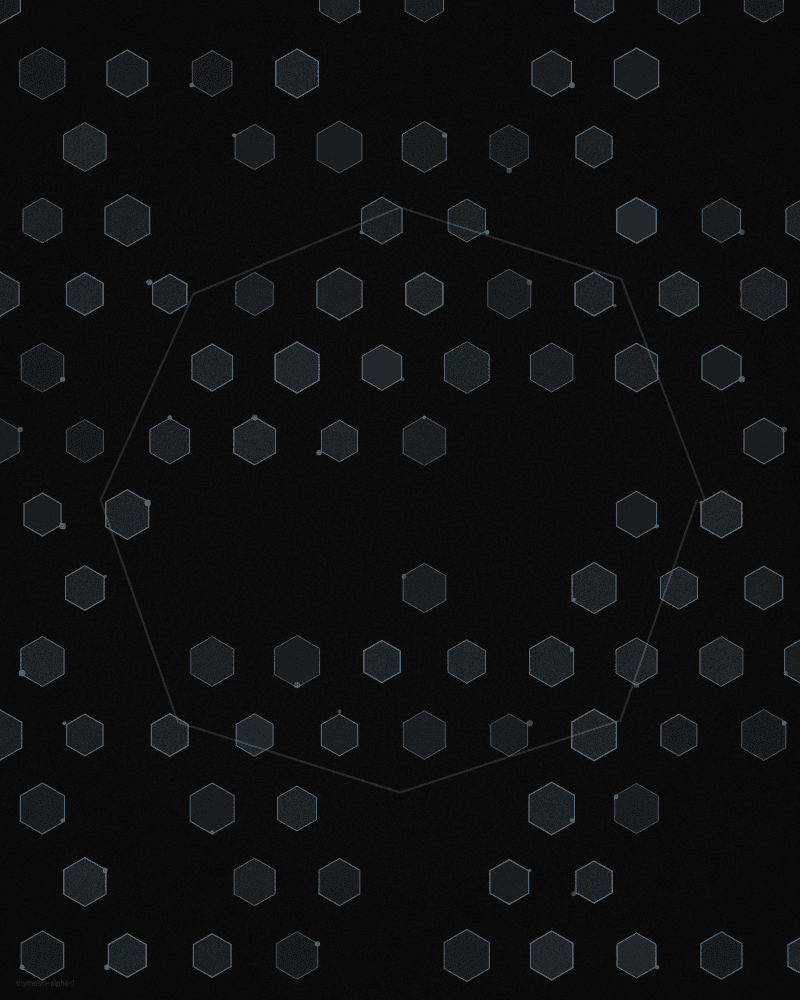
Hexagonal shield mesh
A hexagonal tessellation in steel-blue, a shield mesh interlocking across the frame. The ordered, regulatory language of immune balance — defence held in equilibrium, structured and at rest.

Dermal strata
Stacked dermal strata in warm copper-rose — topographic bands layered with a fine pore stipple and a soft surface sheen. The renewal of skin from beneath, rendered as the quiet geometry of its own layers.
The palette
Every visualisation renders on #0C0C0C — a near-black that recalls the dark room of a laboratory. Each compound category speaks in its own chromatic register. Lines glow faintly against the void, as though caught in the last moment of gallery lighting before the room goes dark.
These are not illustrations. They are data portraits. Each one is as unique as the molecule it represents, generated by the same precision that defines every compound in our collection.